

- Stakeholders called for coordinated action to help India achieve its goal of reducing road fatalities by 50% by 2030
- IIT Kharagpur findings show interventions on NH-16 reduced operating speeds by up to 45%, reinforcing calls for wider adoption across India
Kolkata, June 25, 2026: With India recording over 1.8 lakh road crash fatalities in 2024, policymakers, enforcement agencies, researchers and civil society leaders today gathered in Kolkata to discuss urgent actions needed to help the country achieve its goal of halving road fatalities and serious injuries by 2030.
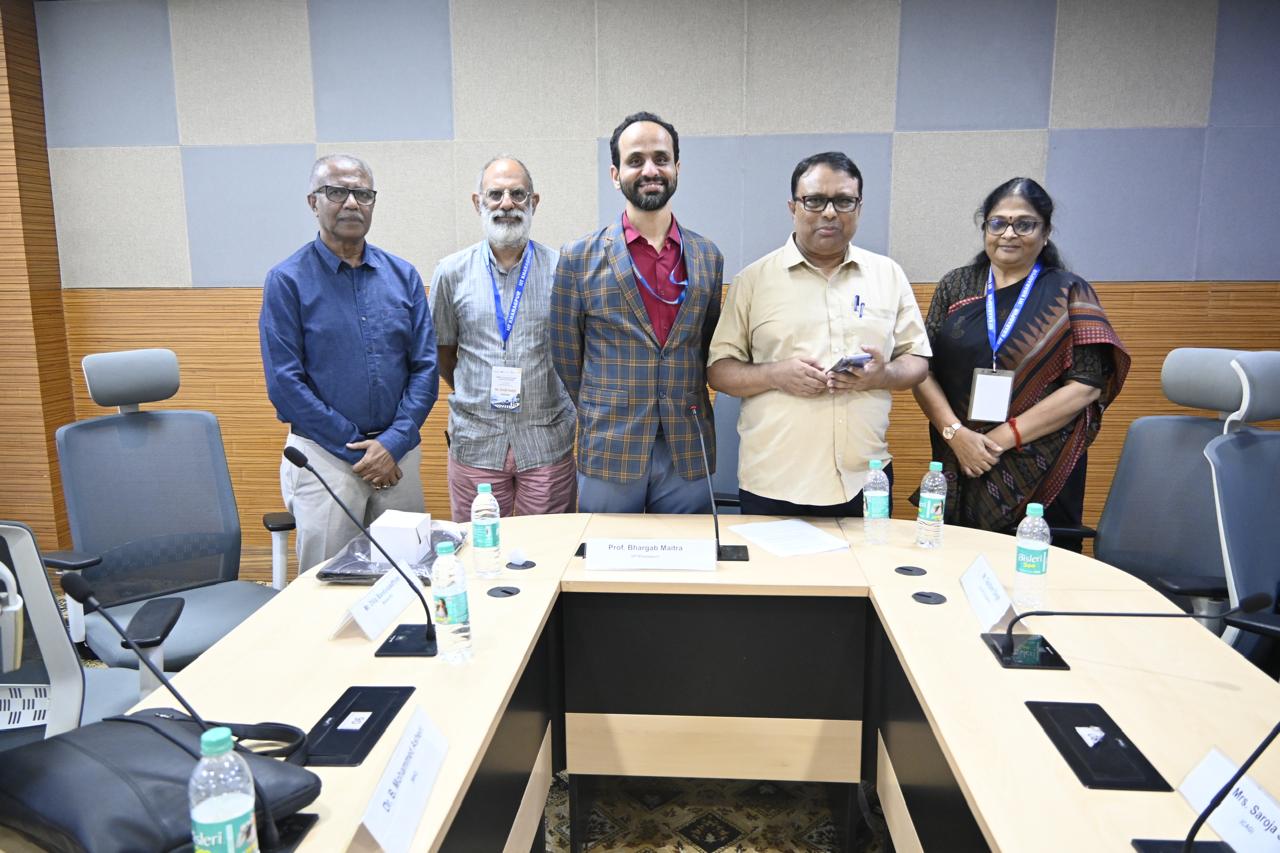
The high-level dialogue, organised by the Road Safety Network (RSN) in partnership with IIT Kharagpur at the IIT Kharagpur Research Park, brought together government officials, public health experts and road safety practitioners to examine evidence-based interventions for reducing road fatalities and serious injuries. The plenary session, “Advancing Road Safety Through Evidence-Based Policy Interventions,” featured insights from Smt. Papia Ghosh Roy Choudhury, Special Secretary, Department of Urban Development and Municipal Affairs, Government of West Bengal; Gautam Singh of SaveLIFE Foundation; Ranjit Gadgil of Parisar; Dr. Mohammed Asheel of the World Health Organization (WHO); and S. Saroja of the Citizen Consumer and Civic Action Group (CAG). Moderated by Prof. (Dr.) Bhargab Maitra, Professor, Department of Civil Engineering, IIT Kharagpur, and Member of the Road Safety Network, the discussion focused on strengthening road safety through data-driven policy, scientific speed management, safer urban mobility and systemic interventions aimed at reducing road fatalities and serious injuries.
A key focus of the discussions was speeding, which continues to be the leading contributor to road crashes in India. According to the latest MORTH Road Accidents 2024 report, over-speeding accounted for 62% per cent of all road accidents and resulted in more than one lakh fatalities nationwide. The data also highlighted the disproportionate impact on vulnerable road users, with pedestrians accounting for 36,526 fatalities and 20.6% of all road crash deaths, making them the second most affected category after two-wheeler riders, who accounted for 46.2% of fatalities across the country.
Against this backdrop, participants highlighted West Bengal’s scientific speed management framework-the first of its kind in India-as an important step towards aligning speed limits with road function, surrounding land use and the safety needs of vulnerable road users. Discussions also focused on the implementation of Safe System interventions, safer urban corridors, technology-enabled enforcement, child passenger safety and long-term road safety action plans.
During the event, IIT Kharagpur presented findings from a study conducted on a 51-km stretch of NH-16 between Balihati and Kolaghat in West Bengal. The study found that design-based speed management interventions reduced operating speeds by 39%-45% for cars, 29%-33% for heavy vehicles and 18%-28% for two-wheelers. Researchers also observed significant reductions in fatal crashes, fatalities and crash severity at locations where such measures were implemented, reinforcing the role of scientific speed management in reducing fatality risks.
Smt. Papia Ghosh Roy Choudhury, Special Secretary, Department of Urban Development and Municipal Affairs, Government of West Bengal, said, “The Safe Corridor initiative demonstrates how a coordinated approach involving safer speeds, road engineering, enforcement and pedestrian-friendly infrastructure can reduce fatality risks. Our efforts are focused on creating safer mobility environments, particularly for vulnerable road users, while building a model that can be replicated across urban areas in West Bengal.”
Bhargab Maitra, Professor, Civil Engineering Department, IIT Kharagpur, and Member of Road Safety Network, said, “West Bengal has taken an important step by adopting a scientific speed management framework. The focus now must be on implementation-translating policy into safer corridors, safer speeds and measurable reductions in fatalities. Kolkata’s recent progress demonstrates that evidence-based interventions can save lives, and the next challenge is to replicate and scale these learnings across other urban centres and districts of West Bengal.”
Participants underscored that reducing road fatalities will require a combination of context- sensitive speed limits, safer road design, technology-enabled enforcement, improved pedestrian infrastructure, stronger emergency response systems and greater coordination among transport, urban development, police, health and local government agencies. The insights from the Kolkata dialogue are expected to inform future road safety policy and implementation efforts in West Bengal and beyond.