

✍️By Special Correspondent
The Institute of Indian Foundrymen (IIF), Eastern Region along with its Kolkata, Howrah, Jamshedpur and Durgapur Chapters, organized the Eastern Regional Conference EASCON 2026 on Saturday, January 10, 2026, commencing at 10:00 AM at Hotel Hindusthan International, Kolkata. Established in 1950 and headquartered in Kolkata, the Institute of Indian Foundrymen (IIF) promotes excellence in metal casting and serves as a national reference point for the Indian Foundry Industry and its customers and suppliers by fostering education, research, training, technology transfer and global industry engagement through 24 Chapters all over India.

Held under the theme “Destination East – Let’s Grow Together,” EASCON 2026 aims to highlight emerging casting market opportunities in Eastern India, with a special focus on Bengal and inviting foundrymen across India to participate in the growth of foundries here in the East.
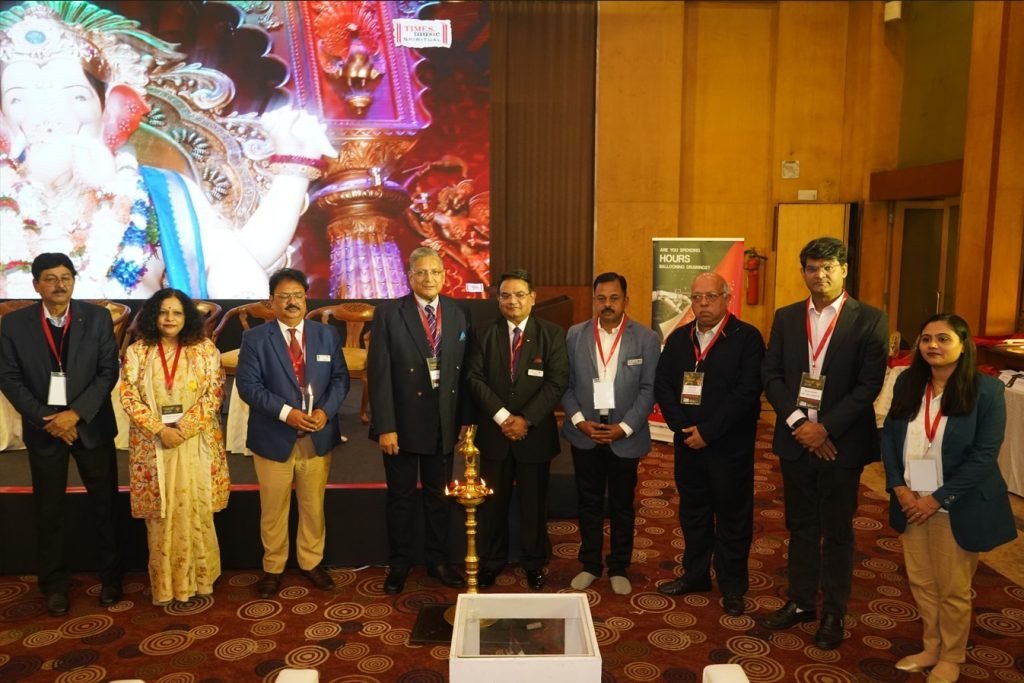
The conference began with an Inaugural Session followed by Technical Sessions and Panel Discussions. The event was graced by Mr. B. N. Agarwal, Managing Partner, R B Agarwalla & Co., as Chief Guest and Mr. Sushil Sharma, President IIF as Guest of Honour.
Mr. S. Muthukumar, National Treasurer, IIF, and Mr. Navneet Agarwal, Imm. Past President, IIF, were present as Special Guests.

EASCON 2026 was chaired by Past President IIF Mr. Vijay Beriwal, Co-Chaired by Past Hon. Treasurer Mr. Pradeep Madhogaria and mentored by Past President Mr. Ravi Sehgal.

Mr Gautam Dutta, Chairman, IIF-Eastern Region, welcomed all the delegates and described the conference as a “Statement of Intent”. In his inaugural address, he specifically articulated the collective vision to restore Howrah’s historical legacy as the “Sheffield of India.” He further emphasized, “Our goal is to create a confluence of ideas, innovation, policy dialogue, and partnerships.”

Mr S Muthukumar, Hon Treasurer, IIF, stressed on enhancing student engagement by organizing conclaves and factory visits. He also suggested establishing dedicated technical committees to address casting defects and conduct transparent “Case Study Competitions.” He further emphasized inviting leaders from other industrial associations to IIF events to create a unified industrial ecosystem.
Mr Navneet Agarwal, Past President, IIF, shed light on the tariff challenges being currently faced by the Foundry Industry. Further, he encouraged to encash the new generation’s hunger to adapt to new technologies.

Mr Vijay S Beriwal, Past President, IIF, appreciated Young Engineer’s Forum, an IIF initiative. In line with this, he further encouraged students from this forum (Student Chapter) to come up with new skills, technologies and initiatives that would benefit the foundry sector and vice versa.

Mr Sushil Sharma, President, IIF, appreciated the Eastern Region’s consistent growth over the years. However, he suggested to change the product line for the Eastern Region. He also acknowledged the contribution of National Centre for Export Promotion (NCEP), a Centre of Excellence, in organizing various international visits, networking and collaborations. Additionally, he urged the foundry fraternity to take advantage of various the National Centre for Skill Development (NCSD) course modules. He mentioned about the Indian Foundry Congress (IFC), IIF’s flagship initiative, to be held with magnanimity in Mumbai from February 12-14, 2026. He further announced that the exhibition space of 15,300 sq.m. for the Indian Foundry Exhibition (IFEX), which will be held concurrently, is completely sold out.
Chief Guest Mr B N Agarwal, Managing Partner, R B Agarwala & Co, urged IIF and its Chapters and Regions to continue working in close partnership. He further said, “Indian Foundry industry is not just growing, it is transforming.”
The vote of thanks was offered by Mr Ranjan Guha, Hon Secretary, IIF-Eastern Region, at the end of the inaugural session.
Panel on Support to MSME Foundries moderated by Mr. Vijay Shankar Beriwal, Managing Partner, Calcutta Iron Udyog and Past President IIF, featuring Mr Bikram Kumar Das, Regional Head (East), NSDC; Mr Swadhin Gayen, Addl Chief Engineer, WBSEDCL; Ms Bhaswati Sinha, Superintendent Engineer (Commerce), WBSEDCL; Ms Malabika Roy, Manager, District Industries Centre; Mr Rahul Amin, Industrial Development Officer, District Industries Centre; and Mr Bimalendu Mal, Environmental Engineer, the West Bengal Pollution Control Board (WBPCB).
Key Pointers from the Panel Discussion on MSME Support for Foundry
Financial Incentives
o The Banglashree incentive scheme is still open for new units that begin commercial production by March 31, 2025.
o Disbursement of pending subsidies is being expedited by the government.
o Older schemes (WBIS 2013 and WBTIIS 2022) are closed to new applications, with focus on clearing existing claims.
Power Tariffs and Energy Policy
o Foundries in Howrah face higher electricity tariffs compared to areas under DVC, due to regulatory and monopoly-area structures.
o WBSEDCL aligns tariffs with DVC only in competitive zones.
o Net Metering has been introduced, enabling industries to reduce power costs through solar energy, applicable from 5 kW load upwards with minimal service charges.
Skill Development and Apprenticeships
o Foundries with 30+ employees must engage apprentices (2.5%–15% of workforce) under NAPS.
o Apprentices are eligible for financial support up to ₹3,000 per month (Centre + State benefits for West Bengal candidates).
o Apprenticeships now extend beyond shop-floor roles to administrative and support functions. (www.apprenticeshipindia.gov.in)
o A job fair at Gariahat ITI on January 14 was announced to connect foundries with skilled youth.
Environmental Compliance
o Several foundry operations are being reclassified from ‘Red’ to ‘Orange’, reducing compliance pressure.
o Adoption of Induction Furnaces over traditional Cupola furnaces is viewed positively in pollution assessments.
o Certain capacities (e.g., below 60,000 tonnes per annum for specific furnace types) may be exempted from full Environmental Clearance, subject to conditions.
Overall Takeaway
o Supportive policies exist, but implementation gaps at the ground level remain.
o Better alignment between industry practices and available schemes across energy, skills, and environment is essential.
o Continued dialogue and transparency between policymakers and foundry stakeholders is critical for sustainable modernisation of the sector.
Panel discussion on Export Opportunities moderated by Mr. Ravi Sehgal, CEO, Essen International, and featuring Mr. Sandip Kejriwal, Kejriwal Castings Ltd.; Mr. Anupam Shah, Nipha Exports Pvt. Ltd.; and Mr. Navneet Agarwal, RBA Exports Pvt. Ltd.
Key Takeaways from the Session
Rising Trade & Green Barriers: Anti-dumping actions are increasingly political, while CBAM has emerged as an immediate compliance challenge, forcing foundries to measure, disclose, and reduce their carbon footprint to remain export-competitive.
Domestic Market as a Shock Absorber: India’s strong infrastructure push across railways, defence, and automotive continues to drive demand, positioning the domestic market as a critical buffer against global volatility despite sectoral imbalances like excess pipe capacity.
Shift to Non-Traditional Export Markets: Africa and Latin America offer significant growth potential, especially in multilateral and Exim Bank–funded projects where Indian technology and standards are preferred over purely price-led competition.
Certification as Market Access, Not Formality: Beyond ISO, market-specific and sustainability certifications such as ZED are becoming essential non-tariff enablers for exports, particularly for MSME foundries.
Technology & Sustainability Upgrades: Adoption of energy-efficient processes, renewable power, and tools like 3D-printed patterns was underscored as vital to meet cost, quality, and environmental expectations in both domestic and global markets.
The programme also contained technical presentations on Cold Box 4.0 – Automatic Foundry Solutions by Mr Carlos Quintella, International Business Developer; Industry 4.0 in Foundry by Dr Rajesh P Barnwal, Scientist F, CSIR-CMERI Durgapur; and Quality Management Software by Mr Rishi Kedia, Co-Founder, Pre6 Tech Pvt. Ltd. The event concluded with an engaging Foundry Quiz for participants.
EASCON 2026 brought together industry leaders, policymakers and foundry professionals to deliberate on opportunities, challenges and collaborative growth pathways for the foundry sector in Eastern India.